

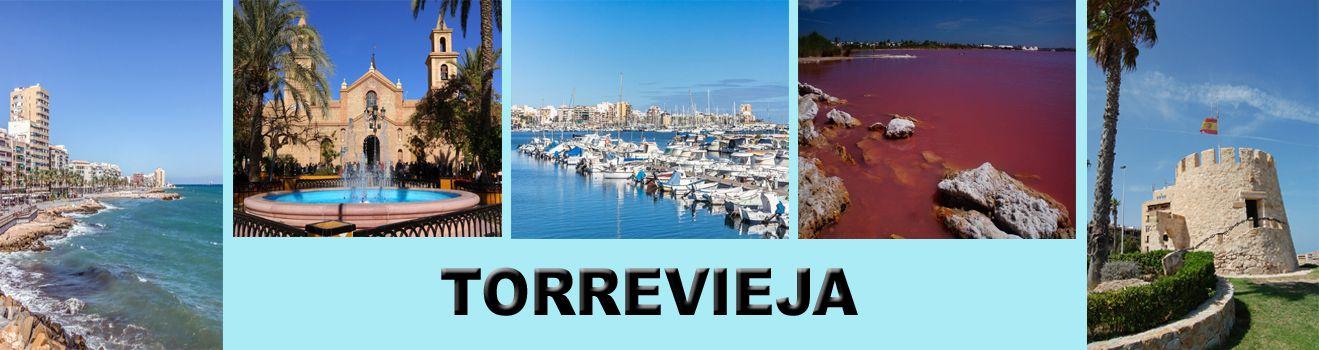
All About - Torrevieja
Torrevieja is situated on the Costa Blanca, approximately 45 minutes south of Alicante airport, about an hour and a half drive from Benidorm (113km)
The name Torrevieja comes from the small tower that used to look down over the harbour.
It isn’t a resort in the package holiday sense, there are only a few hotels and the area is much loved by the Spanish who flock here during the summer months for their holidays. The town is surrounded by excellent urbanisations, all with pools and beautiful gardens and the whole area enjoys fabulous beaches with fine sand and crystal clear waters.

Torrevieja was more or less completely destroyed by an earthquake in 1829 (see more in the history of Torrevieja below)
Torrevieja is voted by WHO (World Health Organisation) as on of the top 10 healthiest places in the world to live, this is due to the properties of the salt lakes.
Torrevieja Salt Flats - It is not permitted to bath in the lakes
23rd February 2023 - The town hall of Torrevieja have announced the start of technical studies into the viability of making a "proper" bathing area in part of the salt lagoons. Many people turn up and take an "unofficial" dip in the salt and mineral rich pink waters every year, with many doing so because of supposed medical and cosmetic benefits they are said to offer. Some at the town hall think that this could be a really valuable tourist attraction if done properly.
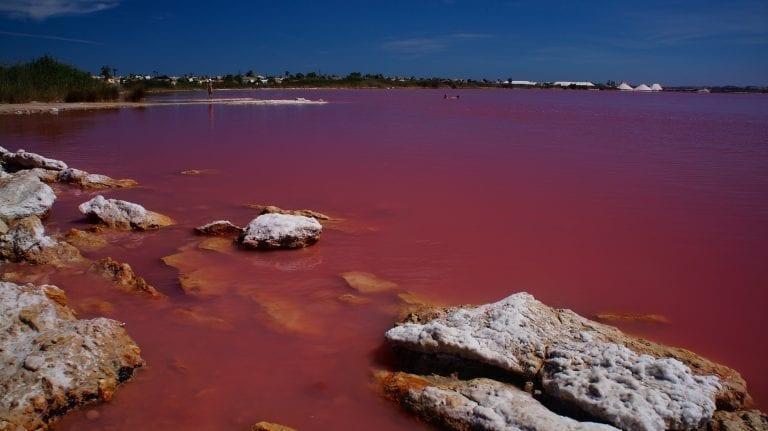
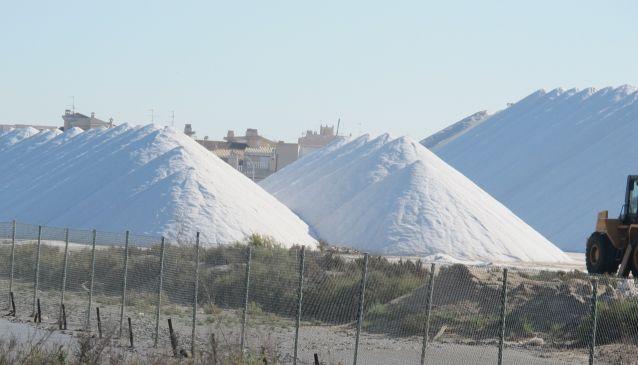
These salt flats from around the 13th Century cover an area of over two thousand hectars. There are two lagoons, La Mata and Torrevieja, these are set two metres above sea level and are joined together by a channel built in 1928. La Mata (the smaller one) is the heater where the sun does its work and the lake in Torrevieja is the concentrator, where the salt is extracted, this lake can extract around five hundred tons of salt per hour. Production tends to take place when Torrevieja starts to heat up in June and ends in October the salt is collected and deposited into large salt mountains.
The pyramid shape prevents rain water from washing away the salt as it simply runs off the sides. The salt is then split into different categories and sizes depending on its final use. Altogether, there are 14,000 different uses for salt including making glass, PVC manufacture, and in the textile, chemical and pharmaceutical industries. It is also used to de-ice the roads.
The Torrevieja salt lake turns pink during certain times of the year this is caused by pigments of the Halobacterium bacteria which lives in the salty environment.
The salt is then moved directly to the ships by conveyor belts linked to the ports so it can be exported abroad. Norway is the main importer while Italy, Portugal, UK, USA, Ireland and Denmark are also major users. Within Spain, Torrevieja salt is sent to Galicia for use by food companies and to Catalonia and the Basque country.
The main attraction is for bird lovers are the flamingos where up to 2,000 can be seen during the breeding season. Many of them will turn a gorgeous shade of pink from eating the shrimps in the water. There are about 100 types of wading, aquatic and marine birds plus other animals in this protected natural park.
Torrevieja Salt Museum - Museo del Mar y de la Sal
The Museum of the Sea and the Salt is an ethnological museum, here you will find a display of handicrafts made of salt, a collection of photographs time. model boats, archaeological material, articles for fishing and navigation and learn the general history and how the salt is produced.
Opening hours - Closed Monday. Tuesday from 10:00 a.m. to 2:00 p.m. From Wednesday to Saturday: from 10:00 a.m. to 2:00 p.m. and from 4:30 p.m. to 8:30 p.m. Sunday: 10:00 a.m. to 13:00 p.m.Free entrance. CHRISTMAS closed 24, 25, 26 and 31 December, 1 and 6 January. Tel - 966 704 643 Address - Calle Patricio Pérez, 10, 03181, Torrevieja

Playa La CuraBeaches
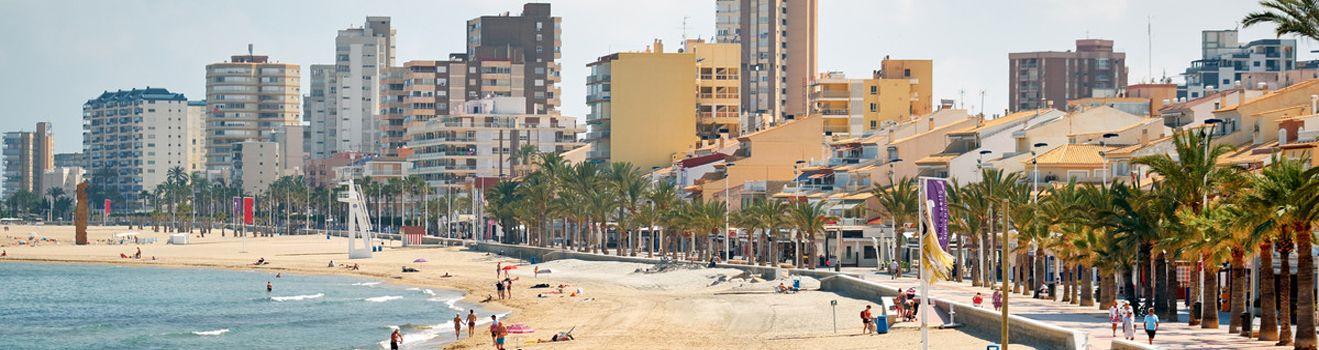
All of the local beaches hold the European Blue Flag for ‘Clean Sea’ and excellent facilities. La Mata, Los Locos, El Cura, El Acequión and Los Náufragos together make up the beaches of the Torreviejan coast.
There are marvellous coves in the northern part, as well as the saline swimming pools, which can be found beside the Juan Aparicio promenade right in the centre of the town.
The promenades and the fishing port are attractions in their own right for visitors to this part of the Southern Mediterranean.
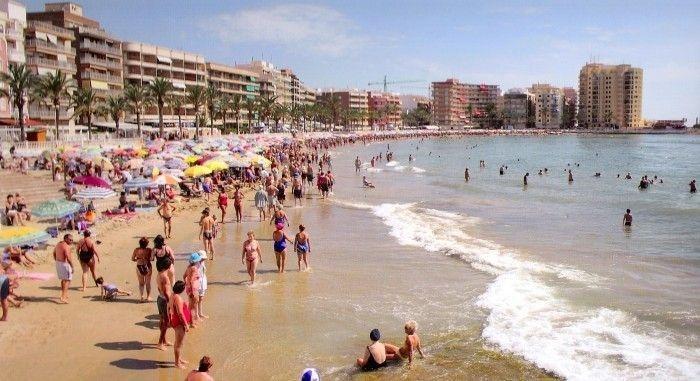
Playa La Cura is Torrevieja´s most urban beach. It´s not a massive beach at only 375 metres long and 27 metres wide so does get crowded in the summer so get there early to get a good spot.
Playa Los Naufragos - Blue flag beach
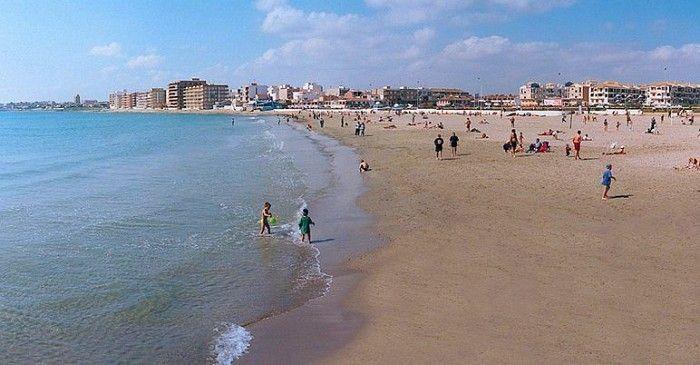
Playa Las Naufragos situated south past the marina and port this is a popular long and sandy beach, being so central it can get very busy during peek season.
Torrevieja’s natural pools
Just south of El Cura are two beautiful small natural swimming pools, lined by palm trees, these pretty coves are ideal for bathing or snorkelling with crystal clear water.
These pools have been created by a group of small breakwaters to make these little beaches surrounded by rocky areas, one sandy pool is just south of the Paseo Duque de Levante breakwater and the other just a few meters south.
Cala Ferris
Situated at the southern end of Torrevieja and less well-know with palm trees, small dunes and crystal clear water.
Cala Piteras - Blue Flag Beach
Perfect for swimming or snorkelling, a small but popular beach.
Playa de los Locos
A lovely sandy beach just up the coast from Playa la Cura. It stretches 760 metres long and 27 metres wide with plenty of parking nearby so it's a popular spot to enjoy a day in the sun.
Torrevieja Port
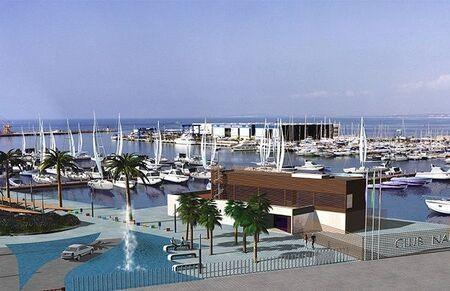
Here you will see a variety of boats from hundreds of chic and sleek yachts to traditional fishing boats bringing home the days catch. Most of the port's activities today are to do with the salt industry.
There is also a S-61 Delfin submarine sitting in the port, which was the first Spanish navy ship to be turned into a floating museum. You will also find two further floating museums, the Albatross III patrol boat and the Pascual Flores schooner, which is a reconstruction of the ships used by Torrevieja sailors to export salt.
Entry to Torrevieja floating museums is €2. There is a minimum height of 1.15 metres. Open Wednesday to Sunday, 10am to 2pm in winter and 6pm to 10.30pm in summer. Closed August 15. It’s also closed on rainy days for safety reasons.
Open Air Markets
Every Friday Torrevieja holds one of the largest open-air markets in Spain and sells all kinds of food, textiles, clothes and accessories. A smaller market can be found at La Florida on a Saturday. Street markets can be found every day of the week in different areas.
Aquapolis Water Park
In Aquópolis Torrevieja you can find attractions for all tastes, the park is easy to find as it is located next to the N 332. The park has 600 parking spaces.
The History of Torrevieja
The name of this settlement is owing to the many maritime watch towers that lined the Mediterranean coast and of which there is still a replica in the form of the Torre del Moro panoramic viewpoint.
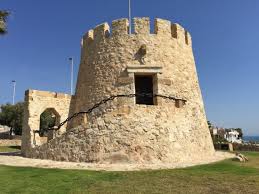
Torrevieja was formed in 1750 and quickly became a popular fishing village that exploited the salt flats as a second income.
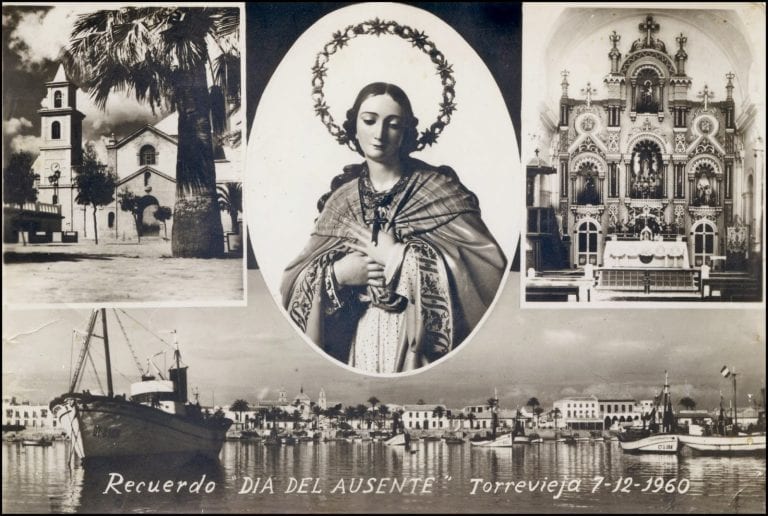
The main history of this town is the earthquake which took place on 21st March 1829, which completely destroyed the town. The earthquake forced a complete rebuild of the town under the direction of the military architect Larramendi.
Today it is a multicultural cosmopolitan city and has 100,000 inhabitants with 180 different nationalities on the state list.
Getting to Torrevieja from Benidorm
The easiest way is to drive either via the N332 or the A7.
There are NO direct links to Torrevieja
By bus
Either the Alsa bus to Alicante then onto another bus to Torrevieja or a bus to the airport and the transfer bus to Torrevieja

Coach - Rosa Tours, you would need to pre-book (+34)966717783 - (+34)675956059
By Tram/train - There is NO train station in Torrevieja - Torrevieja is the largest city in the Valencian Community without a railway connection. 2024, will be the 54th anniversary since the arrival of the last train with passengers.
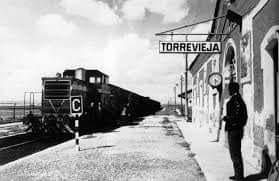
tram/train from Benidorm to Alicante then walk to to the bus station which is over the main road.
The town of Torrevieja is being very strict, as notices have been put up in Spanish and English by the town hall, warning that any tourist seen buying from "looky looky" men, will be fined 200€ on the spot.
Upholding the rules regarding unauthorised street sellers is down to the municipal police, while checking of papers regarding permission to be in the country is down to the National Police. More ...